I’m Having Dating Success, but my Partner Isn’t

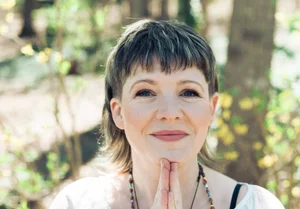
Libby is joined by Mel Cassidy, author of the new book, Radical Relating, A Queer and Polyamory-Informed Guide to Love Beyond the Myth of Monogamy to answer a listener question: how do I handle things if I'm having dating success and my partner isn't? I'm having a joyful, expansive experience, and my partner is sitting on the bench feeling unwanted and envious? This experience is so common and Libby and Mel dive into some tools that can help including some somatic practices for both people.
--------------
Mel Cassidy's website: https://radicalrelating.ca/
Mel's book: https://bookshop.org/a/91754/9798889842453
Mel's Instagram: https://www.instagram.com/radicalrelating/?
--------------
Links:
Join an Open Community Call
https://go.libbysinback.com/community-calls
What Actually Makes Polyamory Work - the Workshop
https://libbysinback.com/workshop
--------------
Also! Libby has created a workbook based on the most popular episodes of the podcast — with simple practices and reflection questions so that you can apply this stuff to your life.
Go to https://libbysinback.com/workbook to get your copy.
Transcript
Mel Cassidy [00:00:04]:
I think it's always helpful when you're navigating conflict or friction through any time in your relationship, get clear on what your North Star is. Like, write down together, like, who are we together? What is the vision we have for us? What is it that's holding us committed to this process? Because it's important to have that as, as your, as your touchstone, as your anchor point, because there are stormy waters in relationships, and there are going to— there's always going to be stormy waters. It is never going to be smooth sailing, and it's always good to remind yourself of what are you navigating by.
Libby Sinback [00:00:55]:
Welcome to Making Polyamory Work. Hi, I'm Libby Sinbeck, and I really want to thank you for being with me today. I'm committed to helping people who live and love outside the status quo have extraordinary relationships because relationships are at the core of our well-being as humans. I think love is why we're here and how we heal. I am so excited to welcome Mel Cassidy back on Making Polyamory Work. Mel is a somatic relationship coach committed to the path of liberatory love and rewilding intimacy. They specialize in working with queer and questioning humans and those who love them, exploring post-monogamous relationships with a focus on polyamory, solo polyamory, and relationship anarchy. They recently published their first book, Radical Relating: A Queer and Polyamory-Informed Guide to Love Beyond the Myth of Monogamy.
Libby Sinback [00:01:49]:
And if they at all sound familiar to you, it's because they were also on Making Polyamory Work back in October of 2021 in the episode called My Partner Is Having a Mental Health Crisis. I've known Mel for many years, and I find them to be an incredibly wise and also delightful human.
Libby Sinback [00:02:07]:
And I think you're going to love this conversation with them.
Libby Sinback [00:02:10]:
We take on a listener question together where the listener is new to non-monogamy and they are married and their partner is not having the same success at dating and exploring this new relationship style that they are, and it is causing problems. If you can relate to this, I think you're really going to love the conversation with Mel and I, and I also really think there's something in it for everybody. But before we get to that, I want to quickly share that every month I do an open community call that is free to join, and we spend an hour and a half together—people from all over the world, all stages in their relationship journeys—and we talk about hard questions and undo a lot of aloneness together. The next one is going to be on March 17th at 7 PM Eastern time, and if that sounds interesting to you, I put the link in the show notes, and I will see you there. Now on to the episode with Mel.
Libby Sinback [00:03:13]:
Hi, Mel.
Mel Cassidy [00:03:15]:
Hi, Libby.
Libby Sinback [00:03:17]:
I am so glad you're here. Do you remember the last time you were on Making Polyamory Work?
Mel Cassidy [00:03:22]:
It was many, many, many moons ago. Many, many. Yeah. I've written a whole book since then. You have.
Libby Sinback [00:03:31]:
I have it. It's right here. It's your baby.
Mel Cassidy [00:03:35]:
My book baby. It's your book baby.
Libby Sinback [00:03:38]:
So we're going to talk about the book, but before we talk about the book, and we're also going to answer a listener question together, which is going to be lovely, which is what I love doing with guests. But before any of that, can you just reintroduce yourself to people who do not know Mel Cassidy?
Mel Cassidy [00:03:57]:
Yeah. So hi listeners, my name's Mel, they/them. I'm a somatic relationship coach. I specialize in working with the queer and questioning and those who love them who are exploring consensual non-monogamy. And, uh, I've been in practice for over a decade now. I'm the author of the book Radical Relating: A Queer and Polyamory-Informed Guide to Love Beyond the Myth of Monogamy. And I live in beautiful British Columbia on the unceded territories of the Squamish, Musqueam, and Tsleil-Waututh peoples. Beautiful.
Libby Sinback [00:04:34]:
But tell me something else about you. Tell me something about, like, you've obviously had this whole journey to becoming the you you are today. Oh yeah. Tell me something about young Mel, past Mel. Like, how did they— what was something about their journey that brought them to this place where now you're like a professional non-monogamous expert human? Like, how do you even get there? And I don't— you have to tell the whole story, but I would love to hear some, some nuggets.
Mel Cassidy [00:05:07]:
Yeah, it's always funny to think of myself as being referred to as an expert, but I guess I have my glasses on today. It makes me feel a little more expert.
Libby Sinback [00:05:15]:
Sorry, you wrote a book.
Mel Cassidy [00:05:18]:
I wrote it out of— you don't—
Libby Sinback [00:05:19]:
well, I mean, of course expert is expert, right?
Mel Cassidy [00:05:21]:
But like, I mean, and I think we put this— we have this idea that experts are done learning, and I don't feel like I'm done learning. No, absolutely not. I am constantly— I am a lifelong learner. But how did I get here? I mean, I'm a second-generation third culture kid. Third culture kids are born in one culture, grow up in another, and then live in a third. And that was my mom. And then that was also me. So I contain in my bones the influence of so many different cultures.
Mel Cassidy [00:05:56]:
And I think one of the gifts of being a third culture kid is, you know, there's more than one way to do things and you are less accepting of one true way or the status quo. And you can see third culture kids being positive disruptors, I think, in a lot of different parts of life because of what we bring in. And I, I think that third culture kid experience for me, I was born in the UK, but I grew up in the Middle East, and my mother is Greek but grew up in South America. Like, there's a lot going on there already.
Libby Sinback [00:06:34]:
So it's in your lineage, it's just, it's in your DNA. Yeah, to have a multiplicity of ways to approach life, love, all that. Totally.
Mel Cassidy [00:06:45]:
And I, I think it's also, it's also in my lineage to be a little bit of an anarchist. I mean, my mom's family is also Romani and the Romani are a diaspora. We've been displaced from Northern India for hundreds and hundreds of years and have been marginalized historically and presently. And there's something in that experience around the inner resilience to just be like, we either conform to what's around us or we stand strong in our difference. And I think there's something about what I was taught by my grandmother about being able to stand strong in my difference that has really supported me to be the radical that I am today. When I started exploring polyamory back in 2011, 2012, there wasn't much about solo polyamory out there. And I was coming—
Libby Sinback [00:07:37]:
and folks might not know this, but you are a huge voice in the solo polyamory movement from that time. Like, I don't know, do we call it a movement? I'm not sure. But like, You, you had a whole website that was like one of the go-to places to learn more about solo polyamory. You hosted a Facebook group that's one of the biggest dedicated to solo polyamory. Yeah. So you created what you didn't have.
Mel Cassidy [00:08:04]:
And I very much so. I like, and that came out of people would ask me like, well, who's your primary partner? Or what are you looking for in a primary? And I was like, I don't want a primary. I had just come out of a 7-year mostly monogamous marriage. I was very clear I didn't want to like buy into any kind of like fairy tale fantasy about romance anymore because it had not served me. And so I said, you know what, I'm in a primary relationship with myself and I'm having an orgy with the universe. And I love it. I have started to mention that second part because the first part did get kind of enfolded into the way that a lot of people define solo polyamory now, which I love. Seeing that, that just makes me so joyful and happy and kind of in awe of how like one thing that I wrote on my OkCupid profile back in 2012 can now be this thing that tons of people use to define themselves and describe themselves.
Mel Cassidy [00:09:03]:
But also, you know, I think in the journey of solo polyamory, like we didn't even— I didn't even have the words for it back then. So that's why I started writing my blog. And then people started emailing me questions because I wrote a blog and I was like, are you kidding me? Why are you asking me for advice? Did you not read? Like, I don't know what I'm doing.
Libby Sinback [00:09:24]:
But you have a blog, so now you're an expert. Sorry.
Mel Cassidy [00:09:29]:
So at some point I was like, okay, maybe I should go back to school and learn some skills to help because I really do love to support people and I tell people my not-so-secret polyamorous agenda is I want all of us to have an easier time having loving, kind, and compassionate relationships with each other. That's what I want.
Libby Sinback [00:09:52]:
And wait, just say that again.
Mel Cassidy [00:09:55]:
I want us to all have an easier time having loving, kind, and compassionate relationships. Hell yeah.
Libby Sinback [00:10:04]:
Hell yeah. What a radical agenda that is.
Mel Cassidy [00:10:09]:
It turns out it's actually quite radical because some people are like, no, we should be able to be mean and be judging and other people.
Libby Sinback [00:10:17]:
Empathy is damaging the world, haven't you heard?
Mel Cassidy [00:10:21]:
My agenda is empathy, basically.
Libby Sinback [00:10:23]:
Your agenda is empathy and making space for people to love how they want to and for that to be easeful and Oh, horrible, horrible, dangerous.
Mel Cassidy [00:10:35]:
And part of that is also making space for the innate human messiness. Right? I, and I talk about this in the book, how perfectionism creates this cage for us. Right. And I think a lot of perfectionism, the way we experience it today, it's coming from things like white supremacy culture, and from patriarchy, from colonialism and other systems of supremacy and control. And and it expects us to be perfect. It has this template of behaviors that we are beholden to, and if you fall short of those in any way, you are punished. There is a social consequence to that.
Libby Sinback [00:11:18]:
Well, and when I think of perfectionism, I also think of performance, you know, like, and I think those two go together, right? Like, we're trying to be perfect and then we're performing our lives instead of living our lives. And gosh, doesn't that feel like it gets amplified by social media too, right? Oh my goodness, so much. And in relationships, like our relationships become this performance of like hashtag goals, right? And you did a really interesting post on social media about that recently, about like performing your partnerships on social media versus not doing that. Yeah. I loved it, I loved it. Just go check out Mel's Instagram. Because they post some really great stuff there. Thanks.
Libby Sinback [00:12:03]:
So you started going and learning more so that you could really have some tools to help people.
Mel Cassidy [00:12:11]:
And I started to see how so many people exploring non-monogamy were being sabotaged by their own internalized mononormativity. And through the years, I've continued to unpack that. Like, I describe it as the monogamy hangover, right? It's all the the bits that are still lingering. So even when you know ideologically you are 100% on board with being polyamorous or any other form of non-monogamous, and, and yet you feel like you fall apart when your partner's not available. You, you are expecting telepathy from your partners. You want that codependent enmeshment feeling. And if you have anything less than that, it feels like it's not real. You discard a relationship that doesn't feel like it's going anywhere.
Mel Cassidy [00:13:00]:
Right? All these, these hangups that we have that come from that mononormative story. And, and I started to work with, okay, how do we rewire ourselves out of that mononormative story? And that's really about recognizing, like, where does that mononormative story come from? And what purpose is it serving? For a lot of us, it gives us the illusion of safety. Yes, it's that carrot at the end of the stick that says if you do these things, if you behave in this perfectly monogamous way, right, you get rewarded. You are rewarded with the happily ever after, with till death do you part, with proof that you're good and valuable and worthy.
Libby Sinback [00:13:44]:
Exactly.
Mel Cassidy [00:13:45]:
And so much of our self-worth gets bound up with this. And, and this is where we get into the idea of like, is non-monogamy political? Because I think it isn't to everybody, but I think there's a level where it inherently is because monogamy itself has been political. Monogamy has been used as a tool of— I mean, even back in the days of like, oh, we want to expand our farm, you should marry that person because they've got extra farmland, right? Like, oh, it was—
Libby Sinback [00:14:13]:
I mean, marriage was very political. Marriage is like— it's— it was all about historically You bake bread really well. I break bread really well. Let's form a bakery together so that we can amplify our bakery and bread-making skills. You have a, like you said, you have a farm over there. I have a farm over here. If we join our families together, then we'll have more land. If we, you know, you have a country, I have a country.
Libby Sinback [00:14:42]:
If we join our children, then our, yeah, our borders will be protected or, you know, We'll be able to fight that other guy over there and stop them from invading us. Yeah. Marriage was, marriage was not, I mean, we can go into a whole thing about that, but like, but here, here's the thing I want to actually tie together that I think is really interesting based on what you said of your history, which your history was, my lineage doesn't get those rewards from conformity unless we abandon ourselves and abandon our culture and abandon who we are. So it sounds like from your lineage, like you had, you didn't ever have the thing that a lot of these other folks are clinging to. Yeah. And so it's like you inherently know what it's like to stand strong in your own identity, in your own reality, and, and be who you are authentically, just even from a heritage standpoint. Yeah.
Mel Cassidy [00:15:38]:
Well, and even if I go into like living memory of my family, my grandmother's family, they were all genocide survivors, right? All the men in the family were killed before my grandmother was even born. And so it was a whole generation of women who were genocide survivors and refugees who had no men to support them. And this is 100 years ago, right? Right. And they had to go, how do we do this? We have absolutely nothing. Like in terms of material possessions. My great-great-grandmother lived the rest of her life at a refugee camp. And, and from this space of nothing, what becomes possible? What do we create? And thank you for like, like tying those things together, because it feels, it feels very true for me as I hear you, as you connect the dots. Because yeah, there's something in, in me that I know I learned from my grandmother, and I know that she learned from her grandmother, around when you get to a point of zero, anything becomes possible.
Libby Sinback [00:16:49]:
And that's terrifying though, right? It is very scary.
Mel Cassidy [00:16:53]:
It is much easier said than done. But I think when we get to that point of zero— not that we should seek out the point of zero, right? But if we— when we experience loss, and I think this is true of any aspect of the grief experience, when we experience loss, there's an opportunity for an inner alchemy. There's an opportunity to come back into relationship with ourselves and back into a deeper relationship with the land, with the people, with the elementals. Right? Because when in the monogamous paradigm, we've been taught that relationship needs to revolve around this dyadic lifelong partnership model. And in modern times, it revolves around the nuclear family. And this is the source of all attachment and belonging. It gives you validity.
Libby Sinback [00:17:48]:
And if you conform to all of these performances, and not just, you know, monogamy, marriage, family, all of that, and buying a house, you know, all of these things that'll give you access to belonging in society. And I think what I've experienced as a coach working with people who signed up for that, tried that out— because I work with a lot of folks who are, you know, coming out of their monogamy hangover and trying to figure out what they're going to hold on to of what they had before and then what they're stepping into. A lot of them are like, I didn't get that belonging. I'm like lonely as hell. I'm in the marriage and I have the family and I have the kids and I have the house and I feel isolated and I feel confused about where I belong. And so it's interesting to notice that that's like, that's what our ticket was supposed to be to that. And it doesn't give us that at all.
Mel Cassidy [00:18:47]:
So it's like a lie. Yeah. Yeah, totally.
Libby Sinback [00:18:51]:
And, and part of that is because in order to access that as well, a lot of us, not all of us, some people actually genuinely want monogamy. They genuinely want the nuclear family and it genuinely works for them. But so many people, they're giving up something of themselves to get there. Yeah.
Mel Cassidy [00:19:08]:
We're taught that self-sacrifice is a love language. Yep. And it's really not like there are times where I think that appeasement response can be very wise and very sensible. To create safety. But as with any kind of nervous system response, whether it's fight, flight, freeze, if it becomes long-term and chronic, it is not beneficial. Right. It loses the medicine. It loses its purpose.
Mel Cassidy [00:19:40]:
Right. Because we are fluid creatures. Our nervous system needs to be flexible. It needs to be resilient. It needs to move through different states. If we get stuck in one place, space. It's kind of like, you know, there, there are some planets in the solar system that, like, the sun is always beating down on one side of them and the other side is always dark, right? Like the moon. Totally.
Mel Cassidy [00:20:06]:
Yeah.
Libby Sinback [00:20:06]:
Well, and also, if we're, if we're in that habit of abandoning ourselves so that we can fit in, then we don't get to experience being ourselves and being accepted.
Mel Cassidy [00:20:20]:
Yeah, and I, I really believe that the connection to self is the foundation for not just relationships but for all happiness in life. And there are so many systems in our world that seek to separate us from ourselves, that seek to tie our self-worth to external things, that seek to make us enslaved to external things. And the true liberation is when we find that deep sense of connection in ourselves, deep sense of love and honoring. And this isn't— I'm not talking about like an egoic, all individualistic, right? I don't need anyone kind of attitude. Like, I'm not talking about that libertarian approach. I'm talking about a deep sense of self. That is incredibly supportive of going into deep connection. Because when you have that deep sense of self, you're not going into connection looking for someone to complete you.
Mel Cassidy [00:21:24]:
You're not going into connection looking for someone to over-function for your under-functioning parts. You're going into connection with a sense of fullness and, and celebration And curiosity.
Libby Sinback [00:21:39]:
Yeah, yeah, I've got me. Who's gonna be into this?
Mel Cassidy [00:21:43]:
Yeah, and, and the curiosity about what is the wholeness of the other person and the other people that you're relating with.
Libby Sinback [00:21:57]:
Hey, uh, real quick before we get back to the episode, if you've been listening to this show for a while and you've been nodding along but then feeling stuck in making these ideas part of your reality, well, I made something for you. It's a workbook based on the most popular episodes of the show with simple practices and reflection questions so that you can apply this stuff to your life. Just head to libysinnback.com/workbook and grab your copy.
Libby Sinback [00:22:23]:
This is such a good transition point for a question, cuz I think exactly what we're talking about relates to this. Yeah.
Mel Cassidy [00:22:30]:
Yeah, are you ready? I'm ready.
Libby Sinback [00:22:32]:
Okay, so this is a listener question from a little while back because I have a backlog, and I'm going to summarize it because it's long. But essentially, the person who wrote identifies as she/her, so a woman, and mentions that her and her husband have been open for a few years now. You know, she realized she was bisexual, he was really supportive, you know, they made a lot of rookie mistakes at the beginning, but then have kind of found their footing on how they want to approach, uh, non-monogamy. But then, you know, she started really— it was a very expansive experience for her. She got to explore her sapphic side. She started then also dating men too. It just like, it was a really expansive experience for her. She was having lots of chemistry.
Libby Sinback [00:23:26]:
She was going to parties. Flirting, she got a lot of attention, and her husband didn't. So while she was having this expansive and positive and affirming experience with lots of ease, he was meeting one rejection after another, getting met with judgment, stigma, sometimes hostility, and he was feeling inadequate and unattractive and You know, that dissonant experience for both of them was really causing him to spiral. And then he started wanting to control her behavior because he was feeling insecure. And then she was trying to compromise and appease him. And then they decided to close their relationship because that wasn't working either. And so she writes and she says, you know, we've been closed for like 6 months. Now granted, that was over a year ago, so sorry, but it's a good question because I don't think that this is an unusual experience.
Libby Sinback [00:24:30]:
Have you heard of this before? I've heard of this.
Mel Cassidy [00:24:32]:
Oh yeah, oh yeah, I feel like this is such a classic experience. Yeah, yeah, I feel like I've been through part of this experience myself.
Libby Sinback [00:24:40]:
Yeah, me too, me too. And so, you know, she says, I want to— we want to reopen. What can we do? What are the things we should be doing to make this possible? And she's like, you know, I want him to be able to be where I am, but I don't think I can do that. Yeah. Yeah.
Mel Cassidy [00:25:01]:
I mean, I think there's kind of two parts of this, right? There's the husband's relationship with himself and what is he doing when he's going out dating and how is he engaging with people that he's getting this kind of pushback? And, and I think that brings in what we were talking before about self-partnership.
Libby Sinback [00:25:17]:
Exactly, that's what made me think of it. Yeah, and we can—
Mel Cassidy [00:25:20]:
I think I just want to name that and then we'll come back and unpack it. And then the other part is, what do we do in the, the relationship, in this marriage, in terms of repair? Because what you've gone through in this experience of— the wife has the euphoria of opening up and getting to experience all these wonderful sapphic moments, and, you know, like, all the fantasies come true, and beautiful and, ah, and the husband is like— and there's resentment that comes in, right? And there's—
Libby Sinback [00:25:51]:
for both of them.
Mel Cassidy [00:25:52]:
Yeah.
Libby Sinback [00:25:52]:
And like, he's raining on her parade and she's making him feel inadequate. Yeah. Or really, she's not making him feel inadequate, but the experience is bringing up feelings of inadequacy.
Mel Cassidy [00:26:05]:
And I've seen people in that position of being the partner who's getting all the attention feeling frustrated with the one who's not. Yeah. Because it feels like, well, are you deliberately sabotaging this for us? Like, what's going on? And so there's this separate piece around, like, what's happening in the marriage as a consequence of all of this, and what's the journey to repair in that? And so I think that's like a separate piece that I want to talk about.
Libby Sinback [00:26:33]:
So when you're thinking about repair, it sounds like what you're thinking about— and I like the way you're framing it this way— it's not like there's a particular incident that needs repair. It's more like there's a dynamic of operating here that is making this worse. Yeah. Because it's a, it's, we have two things going on. Like you said, we have a hard reality of how she's showing up in the world. People are maybe a little more receptive to than how he's showing up in the world. And that's just a hard reality. And there are things you might be able to do to affect that reality.
Libby Sinback [00:27:04]:
And there are things you might not be able to do to affect that reality. Because honestly, there have been whole books written about how different the experiences for cis het men in polyamorous spaces. Yeah. And so there's the reality piece of how can we relate to reality differently? And I feel like that's probably like the journey of like, how do I turn towards myself and find resilience in a difficult situation? And then the second thing I hear is, and then there's this relational dynamic between the two of them in response to that hard reality. Yeah. And how could that change? Am I getting it?
Mel Cassidy [00:27:38]:
Absolutely. And in terms of the relational dynamic, you know, and I talk about this in the book, there are layers of relating, right? It's never as simple as like you meet someone and suddenly, boom, you're in a relationship, even if it feels like that. There's layers that we have to build, and these layers represent trust. And so the first layer is awareness. It's just understanding who is this person, who am I, what are our compatibilities. And the more awareness you have then you move into safety. And safety is about finding that we can be vulnerable, we can do the hard things, and we can come back.
Libby Sinback [00:28:13]:
And can I count on you? Like, can I rely on you when things are hard? Can I turn to you?
Mel Cassidy [00:28:19]:
And the more we experience safety, then we get into intimacy, right? And in intimacy, there's more vulnerability. We're joining each other in the journey, right? We're, we're in a journey together. Once we're in intimacy and repeated experiences of intimacy open the door to relationship. What we often do instead of going through this gentle journey through these layers is we pretend we have the NRE-fueled fantasy of like, we're in a relationship. Great. And let's reverse engineer all the other steps. Mm-hmm.
Libby Sinback [00:28:52]:
How do people do that? Like, what have you observed that people do that reverse engineer things like intimacy or safety without actually getting it?
Mel Cassidy [00:28:59]:
There's a lot of like beholden kind of behaviors or like obligatory behaviors. I mean, one that always gets my hackles up is the like, well, we're married, we should be having more sex. Oh gosh, yeah. And I think that we pretend that we're in this deep relationship, we act as if we're in the deep relationship, and it's kind of like we're gonna fake it till we make it. So it goes back to that performance piece that we talked about earlier. We perform the role of girlfriend, boyfriend, date friend, spouse, whatever label we're putting on it, in the hopes that if we build it, they will come. That, yeah, hard enough, it'll create that as a reality. And maybe sometimes that does work out.
Mel Cassidy [00:29:48]:
Maybe sometimes we're able to have that fantasy, and the reality that we build is not too different. But very often there are differences, and I think for a lot of people, they don't confront those differences until something big happens in a relationship, like opening up a relationship. And so when we open up, we're getting differentiation, we're getting different experiences with different people, and that alone is going to challenge the fantasy.
Libby Sinback [00:30:16]:
Yeah, well, and so it's like there's this performance of what you're supposed to do as a spouse and what you're supposed to get in response that proves you did it right. You know, which might be sex, it might be sharing finances, it might be moving in together, whatever it might be. Like these things that prove I did a good job, I'm good, I'm, you know, we're in this. And what you're saying is there's steps that people are missing around really understanding each other and also building safety with each other, which then unfolds that sense of intimacy. Yeah. And, and so it's like there's a, there's a bedrock that's missing there. Yeah. Yeah.
Mel Cassidy [00:31:01]:
So whenever I hear people going through these kinds of ruptures, right, and in this case it's not that there was like a clear break of trust, like you said, there's not a single incident Yeah, or anybody even doing anything wrong per se. Yeah, but there, there's something that may have been missing in the conversation in the relationship at some point, you know, and, and we don't have time machines. We can't travel back in time to go, okay, can we have that conversation differently, or can we talk about this now?
Libby Sinback [00:31:31]:
Well, can I tell you what I'm picking up on in this that I think is a really big thing to notice is And again, I just, I see this commonly in pairings and I think it's tied to the performance thing that you're talking about. It's like, ah, or the fake it till you make it, you know? It's like, if you're okay, then I'm doing a good job. If you're okay, then I'm okay. If you're happy, then I'm a good partner. And if you're not happy, then I need to fix it. I need to fix that. And the thing is, both people can play into that dynamic. Like sometimes you can show up to a relationship and that's your default is like, I need to make everybody happy.
Libby Sinback [00:32:16]:
Everybody else's happiness is my responsibility. And maybe your partner shows up. And again, in a monogamous dynamic, it's really common. My happiness is your responsibility. My happiness is your responsibility. And, and then it, it's flowing like this, right? It's flowing. And I, if you're just listening, I'm like making this little, infinity loop with my hands. Um, and that can feel like, oh, we're doing it.
Libby Sinback [00:32:39]:
Yeah, right, we're doing it, we're doing the relationship. Yeah. But then you hit this moment where something is feeling good to me and it's not feeling good to my partner, and I don't want to fix it. And, and my partner is so used to me fixing their feelings that when I don't, they feel betrayed. Yeah. And I think that's a thing that's at play here, is— and that's where I see the rupture that you're talking about. It's like, you know, there's a hard thing happening here, and normally the pattern would be, I fix that for you. And what she's seeing— and I think it's wise the way she brought it in her question— she's like, I don't want to do that.
Libby Sinback [00:33:22]:
I don't think that's a good idea for me to keep doing that.
Mel Cassidy [00:33:25]:
But what do I do instead? Instead?
Libby Sinback [00:33:27]:
And how do I stop him from feeling upset that I'm not doing the fixing anymore?
Mel Cassidy [00:33:32]:
Well, and this is part of the mononormativity that we're wrestling with, is we are— we have it role-modeled for us that we over-function for the things that our partners under-function for. Yeah. Which ends up creating this paradigm where when we have a partner who over-functions for something for us, we get to negate our own responsibility in that area. So when you have a partner who overfunctions to do all the emotional labor in a relationship, you get to underfunction in terms of your emotional self-responsibility. Okay.
Libby Sinback [00:34:03]:
So then let's bring it back to that first part. So relationship to—
Mel Cassidy [00:34:07]:
relationship to self. Yeah. I think I also want to pin in here that there is also an element here that I think has to do with the gendered experiences. Because boys in our culture, in our society, are still not getting enough permission to be connected to their emotions, to have that relationship to empathy. I think there are so many things in our society that try to damage young boys and men so that they won't have empathy. And this becomes—
Libby Sinback [00:34:44]:
and self-compassion, not even self-compassion. Yeah, yeah.
Mel Cassidy [00:34:48]:
Yeah, we had— yeah, empathy starts with how you have empathy with yourself, how you attune to and connect with yourself. And something that I've been observing recently is, you know, when we think about this idea of who am I, right, how we define ourselves, this is such an interesting thing to explore because we often get told how to define ourselves. Based on some kind of like triangulating of things that our family or our neighbors or our religion or our culture have told us to define ourselves by. So this could be you define yourselves by your job or by your success or by your position in your spiritual community, right? And yet we don't get taught how to define ourselves from the inside out. Right? How do you define yourself in terms of, I am somebody who feels this, I am someone who experiences this? And so there's a lot of dislocating of self in the way that we are raised, and it's all outside yourself.
Libby Sinback [00:36:00]:
It's all that you're being told you are and/or stuff that you have acquired or performed or that you have that is extrinsically valuable to other people, and you're defined by that instead of, like you said, your own experience of the world.
Mel Cassidy [00:36:16]:
And if we look at, like, attachment experiences, right, like what Western attachment theory says, you're gonna get that sense of self met by having your monogamous nuclear family partner. But that's not how human beings evolved. We evolved in villages and extended family units and tribes, where an infant would have been supported to discover their sense of self by having multiple supportive adults around them. And so multiple different points of attachment, right? And we're starving for that.
Libby Sinback [00:36:51]:
I'm so glad you said that, because like modern attachment theory bugs me so much, because, because it's so dyadic. And I'm like, well, first of all, even in a nuclear family structure, most of the time it is not a dyad. Yeah. And like, and so it just ignores that alone, right? And then it's taking that, that dyadic relationship usually with the mother, right? And translating that into an adult relationship. And there's so many problems with that. Problems I have with that, not the least of which is what you brought forward, which is like human beings can have multiple attachment points as babies. We don't, you know, even as babies we can recognize more than one attachment figure. It's not just the one who's giving us the breast milk.
Libby Sinback [00:37:39]:
And in fact, there have been many studies that show it's not even about the food, has nothing to do with the food. It has to do with comfort. It has to do with love and affection and attention. And we know that, and that can be received from many people. So I just— thank you for letting me have my rant because it's just like, I am with you on that rant. But so, but so, Mel, here's the thing that I want to like focus in on. I want to focus us in on this. So there's, again, we see the two things, the dynamic between the two people, and they obviously go together, right? And the dynamic between this man and himself.
Libby Sinback [00:38:12]:
Yeah. And probably also the dynamic between the woman and herself. Absolutely. But if we were going to sit next to this man, if he were to come to us and say, Mel, Libby, I need to walk through this, what do I do?
Mel Cassidy [00:38:27]:
Yeah. What would you tell him? Yeah. I think that the first thing I would be curious about is how does this man experience his sense of self? Is he relying on other people and the connection with other people to create that sense of self? And that could well be the case. Especially if he didn't get enough of that support in childhood.
Libby Sinback [00:38:51]:
I think this is so common, like you said, and not to over-genderize it, but I do think it's really common with cis men, especially because they've been taught that sexual attention from women is a huge sign of their worth. And so it's not about what they like or don't like, it's about who likes them, right? Who can they attract? And if that's what this man has been told and has internalized, maybe even couldn't consciously speak it, but like and then he's going out trying to attract women. He's succeeded in attracting the one and marrying them, and that, you know, maybe thought, oh, I've checked the box now, I'm worthy. And then goes and has to confront, oh, now I have all this external data that says I'm not worthy. Yeah.
Mel Cassidy [00:39:33]:
And it's gonna, it's gonna bring up the, the wounded inner child stuff, right? Because what's happening is there's a core wound there where someone who's doing that never got the opportunity to develop a full sense of self and a sense of worth for just being a human.
Libby Sinback [00:39:52]:
Yeah, which is such a controversial thing, right? That's so important.
Mel Cassidy [00:39:56]:
If you're like, I rely on my partner to give me my sense of self, now my partner is off having dates with other people. Oh my God, there's a kind of panic that sets in that goes on. I need to pad myself with more people so that I can still have a sense of self, and then we come into connection from a space of neediness.
Libby Sinback [00:40:15]:
Oh, and that is so good at attracting other people, isn't it?
Libby Sinback [00:40:20]:
It's—
Libby Sinback [00:40:20]:
it, you know, it can be, actually. It really can be. I do think that some people are attracted to it, but I think a lot of people obviously are not.
Mel Cassidy [00:40:29]:
And I think that within non-monogamous spaces where we do, I think, practice a mindset of abundance Yes. Yeah, we don't have to tolerate a new connection where someone is being or is coming across as very needy, or just, fix me, I need you to fix me, I need you to make me feel better. Yeah, a lot of expectations of, you know, I need you to over-function for me now because I've never learned how to do this functioning by myself, and the person who used to over-function for me is no longer available in the same way. And it's energetic.
Libby Sinback [00:41:06]:
You can feel it. You can feel when someone's got that going on. And so I think that there's an entirely rational reason to think that that's what's going on. But then how do you shift that? Like, because that's like decades probably of conditioning and coping strategies and layers of story and behavior. And like, where would you start if you wanted to start peeling that back and bringing that self-security?
Mel Cassidy [00:41:48]:
So I think that there's, there's two pieces to this that I want to name. The first one is to take a trauma-informed approach. And even though there hasn't been like a single incident this situation is the— it is the conditions of trauma, right? Because what's happening for this— the husband here is overwhelming. And one of the definitions of trauma is things are overwhelming beyond our ability to cope with them. Sure, right? And he doesn't have the resources to be able to navigate it.
Libby Sinback [00:42:19]:
So we want to take it— I want to pause there because I think that's something that's so important to say, and it's a tough one say because you're extending some compassion towards someone and towards the dynamic that is harmful to women, right? But you're naming something that I think is true and that I've observed and felt myself, which is sure, that is true. And this is a person who has also experienced trauma from the dynamic that is plunking them in this situation. Yeah. And they do not have the tools tools to move through it. If they did, they'd be doing it.
Mel Cassidy [00:42:57]:
And I think, I, you know, I want to paraphrase bell hooks that like the first victim of patriarchy is men. Like, you know, the trauma we're looking at is not just what's happened in the relationship, right? We're looking at a developmental trauma that I think so many men in this world experience, an ancestral trauma really, of generations of being raised in patriarchy and misogyny and being denied the opportunities to develop these really good relational skills. So taking a trauma-informed approach to that, we want to look at how are we creating safety and orientation for him, right? There needs to be a space for him to be able to slow down and get the lay of the land, not just the lay of the land externally, which I think is what a lot of people opening up start focusing on, is like, how do I do the logistics? How do we organize dates? You know, how do we— what kind of agreements should we have? We have to orient internally first, correct? Yeah. So he needs to have that internal orientation, and from there we're going to know about how do we create safety. Well, and I want to—
Libby Sinback [00:44:05]:
I want to interrupt there. I'm sorry, I just want to bring this in. The way that I would do that, if I'm thinking about teaching someone how to orient to themselves It's about teaching them to track themselves, teaching them to feel in their own bodies. You know, that somatics that you talk about? It's like being able to tune in. And a lot of— I think a lot of people socialized as men in particular don't learn how to do this, how to listen inside their bodies and track. Okay, I'm here in this space now. Yeah, I'm seeing all these people here. What's happening inside of me? What stories are coming up? What sensations are in my body? What feelings are there? Can I track those and acknowledge them? Can I meet them with curiosity and compassion? And then I'm being with myself.
Libby Sinback [00:44:58]:
Yeah.
Mel Cassidy [00:44:58]:
And I will say that if someone finds it challenging to track those feelings and sensations, because that's a lot of information, just try to track mobilization. Ooh, try to track when you feel a sense of like, I need to do something, versus when you feel I can rest now, versus when you feel like there's genuine connection. Because these, these are the three states of the nervous system: mobilization, rest, and connection. And a lot of the time, we have learned to connect only through mobilization.
Libby Sinback [00:45:37]:
Yes, that's so true.
Mel Cassidy [00:45:39]:
And very often the way we connect is our nervous system is mobilized, but it's wearing a costume of connection, right? Back to that idea of performance.
Libby Sinback [00:45:48]:
Well, it's trying to fix a problem. Yeah, yeah.
Mel Cassidy [00:45:51]:
True genuine connection comes from that space of rest, comes from that space of ease. And so if nothing else, just start tracking that because when we go into states of distress, when we go into states of panic, very often we've learned to suppress it, right? We're taught you're not allowed to let out your fight response, you're not allowed to leave the situation and flee, you know. And so we either freeze up and dissociate from ourselves and from our lives, or we go into appeasement and people pleasing. And I think also that in under the umbrella of appeasement is trying to fix things. And, you know, also there's sometimes a bit of fuck it, I'll just do it, try it, and fuck around and find out.
Libby Sinback [00:46:34]:
And well, now all of that is suppressing what's happening inside of you and then moving to mobilization. I love this framework. That's really, really helpful to move to think about, am I in a place of rest? Am I in a place of mobilization? And what was the third one? Connection. Connection.
Mel Cassidy [00:46:51]:
And the way that I always invite people to tune into connection is notice is if you can feel sensations of warmth or energy through your chest and through your face, because that's where our ventral vagal nerve goes. That's the part of our nervous system that is all about connection. And when you can— if you're tuning into a sense of warmth in that area, then chances are you're at least accessing some of that connection space. That's true. But if you, you know, tune into what's happening in your chest and it feels tight and frozen, or you feel like, I can't breathe, or your face is kind of— my face will do this sometimes, my face like retreats back into my neck, like almost like a turtle. That's a good sign that you're not feeling that sense of genuine connection in that moment. And, and it'll, it'll change all the time because our nervous systems are fluid and, and have to change. So going back to, you know, this trauma-informed approach, we're tracking that.
Mel Cassidy [00:47:53]:
We're starting off with developing this self-relationship and this self-awareness. And then from there, we want to look at, okay, how do we go from where we are and go towards the edges in a safe way, right? That's creating resilience. So it's— it sounds like this guy is going on dates and the mobilization response is huge, and there isn't the genuine connection happening, and the other person's picking up on that. So how do you create resilience in that moment? In that moment? Now, I think, you know, somatic experiencing can help with that. I think even something as simple as, like, before you go on a date, do something to release the mobilization response. Go for a run. You know, do some exercises that allow you to like push. I always think of like the, the part of our mobilization that goes into like the fight response.
Mel Cassidy [00:48:51]:
It's our upper body. So what movements can you do with your upper body, whether it's like weeding or cleaning, right? Or, or kneading bread, right? Anything that involves your upper body is going to help release that. If it's the panic and the flight response that's coming up, then mobilize your lower body. Go for a walk, go for a run, dance around, lie on your back and pretend you're riding a bicycle. You know, yeah, release that energy through your legs and then see what happens when you go into connection. Because if we're excessively mobilized when we're trying to connect with others, what happens is we lose the locus of ourself. We, we place— we're so mobilized, we lean off of our center, we lean towards the other person. We're hungry, we're yearning for them to fill us with something, right? Yeah.
Libby Sinback [00:49:48]:
And the thing is, when, when you're leaning in like that, I also feel like what you're gonna bring to you is probably not what you want, you know, because then you're going to bring someone else who's in that mobilized state of— except it might be more of the, like, the fix-it and the fawn. It's like, okay, I see you need something. My value comes from fixing people and helping them feel better. And again, then you have this alchemy that it doesn't even work in monogamy that great. It really doesn't work in polyamory. So I want to actually— I want to shift us just for sake of time But I want to like put a button on what we're saying here, what you're saying here so eloquently, which is a starting point for coming into connection with yourself is tracking your states. Yeah. And then when you're tracking what's happening, if you can do something that invites a shift in state for yourself and then, and then track what happens when you do that, that's a good starting point.
Mel Cassidy [00:50:54]:
And very often what you're doing to invite that shift is finding a way to honor what the mobilization response is wanting to do. Right. Right. And when I say finding a way to honor, find a way that's, you know, non-disruptive. Right. One of my favorite things, rip up a piece of paper. You know, when I'm feeling frustrated or excess energy around something, I write the thoughts down, I rip them up, and that allows me to kind of excise the thing that feels burdensome in my mind and in my heart.
Libby Sinback [00:51:27]:
Well, and when I think of that as a practice for this person who does not have a practice of processing— my guess, this is just my guess from the limited amount of information we have— does not have a practice of— beep— does not have a process of processing through, or even maybe being with his stuff, this is such a good starting point. And I will add, if you're listening and you're like, well, I don't know if I can do that by myself, you can get help with that. There are all kinds of wonderful people who will walk you through that practice a few times to help you build it on your own. The way that I think about therapy and coaching is Nobody's here to tell you what to do. Nobody's here to even fix you because you're not broken. It's more like, do you have a goal that you're struggling to get to on your own? And would you like a personal trainer to help you? Yeah.
Mel Cassidy [00:52:26]:
And I think something that gets forgotten about for a lot of people who are in that, you know, still in those early stages of opening up or, you know, embarking on non-monogamy solo is that there's a very important role for community. Yes. And your community—
Libby Sinback [00:52:42]:
I was gonna say that next.
Mel Cassidy [00:52:44]:
The community is the people that you do not date. Correct. Say it again.
Libby Sinback [00:52:48]:
Say it again.
Mel Cassidy [00:52:49]:
The community that supports you are the people you do not date.
Libby Sinback [00:52:54]:
You do not date and you're not trying to date. Yeah.
Mel Cassidy [00:52:58]:
And, and if something organically happens along the line, whatever. But like, your peers, you know, the people who you you have friendships with, the people you have platonic relationships with, they are part of this attachment network for you. And I find that very often the people who are struggling in poly dating also have some struggles around creating friendships. And we don't get taught friendship skills, right? A lot of us learned it by accident, if at all. I mean, as a neurodivergent kid, I was very much a loner, and I only learned social skills through doing theater. And that was, and that was a privilege, right? So I recognize I was privileged in that regard. And so, you know, we want to learn how to have more friendships and deeper friendships. And again, this goes back to the socialization that a lot of men get, which is that there's a limit to how much they can love their friend.
Mel Cassidy [00:54:01]:
Sure.
Libby Sinback [00:54:01]:
Intimacy is only through sex, right? That's where intimacy comes from, is through sex. And my friendships are people I do stuff with. Yeah, I watch the game with, or I go to the bar with, or, you know. Exactly.
Mel Cassidy [00:54:15]:
And so, like, I look at this in the book and this idea of the social quadrant, that we have a whole part of our relational landscape that is about our social relationships, and that social intimacy is really nourishing and important. And developing a deep sense of relationship in our social connections is also really important. If we are only ever keeping these superficial relationships, we're probably feeling very alone. And if we feel very alone, if we can't have social intimacy, if we don't know how to get to social intimacy, we're probably going to struggle with other forms of intimacy as well. And I see this happen a lot for people who got married young I'm one of those people who got married young. Our social skills go through a kind of atrophy. It's like they get frozen in time because the mononormative nuclear family script says once you're married, you are now this joint unit in social life, right? And there's a very different way of navigating social interactions as a— where are we?
Libby Sinback [00:55:20]:
We socialize as a couple. I mean, that was not my It's not ever my story, but I know what it is because I see it. So it's not something that's unknown to me. And yeah, I do think that learning to navigate socially on your own as a single unit is probably more important than single dating. I think it's learning how to connect with other humans. And I want to push back a little bit on the shallow versus not shallow, shallow versus intimate, I do think it's okay to allow those ties to be a little bit loose. I think the difference that I would play, that I would, the fine line that I would draw would be not performative. Like you don't have to go sit and tell your life story to someone, but can you show up as yourself and be around other people as yourself, unmasked, unperforming? And if If you do that, I would say that's a good starting point for anybody is like, you might not be ready to sit down with somebody and have a heart-to-heart if that feels really weird.
Libby Sinback [00:56:24]:
But if you can show up unmasked and interact and then go away and then come back next week and then go away and then come back next week and build that familiarity of, I'm just gonna be me. I'm just gonna be me again. Let's see how this goes.
Mel Cassidy [00:56:40]:
Yeah. And in that, you're also using your discernment, right? Going back to this idea of the layers. You're not just meeting someone and saying, oh, that's it, you're my best friend now. No, you're taking your time to build awareness and let people build awareness of you and then find where is the authentic connection where we can find safety. And from there, how do we grow more intimacy and vulnerability with each other? Yeah. Yeah.
Libby Sinback [00:57:02]:
So it's not a short path, but it's actually not as long as you think. It's probably not as long as you think if you start walking it.
Mel Cassidy [00:57:11]:
And I want to say, in terms of like, for a couple going through this, looking at, okay, how do we do the repair? And, you know, when we are ready to open up again, what do we do? Yeah, I, I find that relationship agreements kind of get treated as like this big lump, and I find it helpful to think about it in terms of like, there are appetizer agreements.
Libby Sinback [00:57:32]:
When I say more about the lump, what do you mean by a lump?
Mel Cassidy [00:57:35]:
We have all different kinds of agreements and we just kind of throw them all in, and basically people kind of going, well, this is what I want, and I'm just going to like try to have power over you until you agree to this for me. Whereas, you know, if we really want to put the consent into consensual non-monogamy, we really need to find that space of mutuality. And so I find that breaking it down into different parts is helpful. So an appetizer agreement is really like what's the beginning stage. Like, maybe the appetizer agreement here is we're committing to just forming friendships with other people outside of our relationship, just friendships with different genders, right?
Libby Sinback [00:58:19]:
I go out and hang out with one person on my own, and you go hang out with some people on your own, and we're just playing in that space of not controlling Dealing with feelings of comparison. Yeah.
Mel Cassidy [00:58:34]:
And then you get to the entree agreements. And so an entree agreement with this might be something like, okay, we are going to start dating, but we're going to have this one night each week where we go do our own thing. And maybe that is my night. I'm off with my girlfriend. And that night you're off with your guys and you're going to have a guys art night, right? And you explore, okay, what is the main course that we're exploring right now? And I always tell people, like, it's okay to have a time-limited agreement, right? Use it as an experiment, not as this is now forever more true, right? 100%. Try it out for a period of time and get the data, and then come back and go, what did we learn from this? And then from there, you know, from entrees, we have seasoning agreements where it's like, we need to tweak it. It's like, this needs a little more cumin. And then we, you know, we might look at dessert agreements, which is how do we transition and change a relationship in a good way?
Libby Sinback [00:59:36]:
Mm-hmm. I love that. And I love that too, because I feel like as you're trying things, that's going to force you to have conversations about how things went, how things are feeling, and not make agreements from this, like you were saying before, this reactive place of this is how I want to feel, make sure that I feel this way, and that agreement needs to do that. Yeah. And so I think that's a really important part of this. And I think also just for both of them, what I would say is like, be tracking when am I making myself more responsible for the other person than I need to be? Or when am I undertaking responsibility for myself in this moment? Like, I would come up with some soothing plans for folks. So a soothing plan for the wife might look like, hey, he's in a dark place right now and I am about to go out and have fun. How can I take care of myself so that I don't feel guilty and then let that guilt cause our relationship to get all mucky because I'm feeling guilty, and then I'm not compassionate towards him.
Libby Sinback [01:00:50]:
Instead, I feel like I gotta tiptoe around him and walk on eggshells. Like, what's my soothing plan to care for myself so I can have fun and then come home and be loving? And then for him, it would be the opposite, right? Like, okay, I know that I'm having a cloudy day and I don't want to rain on my wife's parade, but I might need some I need support from her in some ways. How am I going to turn towards the parts of me that are struggling and give them some care so that I can speak for what's going on inside of me instead of just having it be everywhere and darkening everybody's space and then expecting her to fix it? Like, that would be a step that I would go to with them that would also kind of, I think, rewire that pattern. Yeah, I love that.
Mel Cassidy [01:01:41]:
I love that. And I would even say, like, one of the things that I like to add when people are making these, like, self-soothing or self-care plans is make sure you've got some kind of creative outlet in there. Oh, I love that. You know, whether it's journaling or just listening to music or using some coloring pages or anything along those lines. Having a creative outlet, I think it supports us in that erotic quadrant. And that's very often the place that is feeling a little more wounded or abandoned when it comes to dating other people.
Libby Sinback [01:02:18]:
I love that you named that. I love that you brought together creativity and erotic because— I'm going to say that again because I said erotic so weird. I love the way you brought in creativity and erotic erotic, because, you know, I, I talked about this in an episode way back with Aubrey, who does ace sex education, and they were talking about how erotic isn't just about sex, right? Erotic is about aliveness. Erotic is about creation. And yeah, so being able to bring in a creative practice around the self-soothing so that you're activating— and I love that, Mel, that's so good.
Libby Sinback [01:03:01]:
Boo!
Libby Sinback [01:03:01]:
We could talk about this for ages, but I wonder if you just have last thoughts about this question before we start to wind things down.
Mel Cassidy [01:03:09]:
Yeah, I mean, the questions that the listener asked are like, what do we do now and where do we go from here? And the one thing I would add is I think it's always helpful when you're navigating conflict or friction through any time in your relationship, get clear on what your North Star is. Like, write down together, like, who are we together? What is the vision we have for us? What is it that's holding us committed to this process? Because it's important to have that as your, as your touchstone, as your anchor point, because there are stormy waters in relationship ships, and there are going to— there's always going to be stormy waters. It is never going to be smooth sailing. And it's always good to remind yourself of what are you navigating by. I love that.
Libby Sinback [01:04:00]:
Yeah, like, what's your big why? Can you keep coming back to it in a moment when you're just having a hard time and you want to fix somebody, or you want someone to fix you, or you're wanting to control things or you're wanting to please and appease, like, how can you turn towards the, nope, not gonna do that. I'm gonna use this tool. I'm gonna use the soothing plan. I'm gonna do this practice because I want this for my life. I want this for myself. This is part of my value as a human and how I want to move through the world. 100%. I love it.
Libby Sinback [01:04:41]:
So now people can buy this book, obviously. Yes, they can.
Mel Cassidy [01:04:47]:
They can.
Libby Sinback [01:04:47]:
They should. It's great. Yeah. But what are some other stuff you're doing that you want to tell our listeners about?
Mel Cassidy [01:04:55]:
So in 2026, I'm relaunching my Monogamy Detox course, and it's going to be reimagined as several separate courses which will each go in depth into different aspects of this journey of detoxing from mononormativity and taking this radical relating path. And I'm really excited about that. You know, I've taught the Monogamy Detox for so many years now, and, and always done it over 6 weeks. And the one thing that people come back with is it feels like it's too much for 6 weeks. I'm like, yeah, we cannot undo millennia of programming in 6 weeks flat, so I'm listening to my own advice there, and I'm titrating it out. But folks can also follow, like, I have other one-off workshops that come up, and you can find more information about that finding me on social media at Radical Relating. I've started writing on Substack, more focused on somatics, and I always do the voice narration for the Substack articles. So there's always a little somatic meditation at the end there.
Mel Cassidy [01:05:55]:
And then you can find me at radicalrelating.ca.
Libby Sinback [01:05:58]:
Amazing. Oh my gosh.
Mel Cassidy [01:06:00]:
Thank you for being on my show. Thank you for having me, Libby.
Libby Sinback [01:06:11]:
Thank you so much for joining me today. If you have any thoughts about this episode or a question you'd like me to answer on the show, I would love to hear from you. You could find me on Instagram at That Polyam Mom, or you can find me on my website libysinnback.com. You can also leave a comment on the episode on the Spotify platform, and I read all of those and reply to most of them. If my podcasts are helping you but you feel like you'd like even more support, I do this for a living. I am a coach and I help individuals, couples, and groups have amazing relationships. You can find out more about my offerings on my website. If you love this podcast, please share it with your friends, your networks, your Facebook groups, etc.
Libby Sinback [01:06:54]:
And make sure you subscribe so you don't miss an episode. Also, if you listen on iTunes or Spotify, it makes a really big difference if you leave a review or a comment because that helps more people find the show. And thank you so much to everyone who's already done that. Making Polyamory Work is created by me, Libby Sinback. It's edited by the team at Assistify Coaching and hosted on the Spotify Podcast Network. Ioana Luca manages the website and posts the transcripts.